
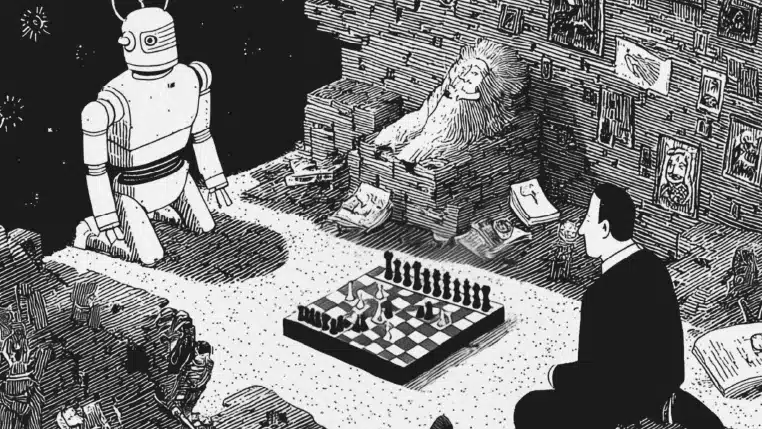
The human side of AI: how tech can bring marketing closer to people
Published on 29 April, 2026 | Author: Digitalzone
The human side of AI: how tech can bring marketing closer to people
Artificial intelligence once sounded like a far-off dream, something that belonged to science fiction. Today, it’s not only here, it’s reshaping how we connect, communicate, and create. But here’s the truth that often gets lost in the noise: AI doesn’t replace marketers—it amplifies their empathy. When used thoughtfully, technology can help brands speak more like humans and less like machines. It brings marketing closer to people.
Marketing was always about people.
Every marketer knows this: success comes from understanding people—not just their needs but their emotions, motivations, and values. Yet, with the digital transformation of marketing, that human connection sometimes got buried under data points and dashboards.
You’ve probably felt this yourself. Endless metrics, campaign reports, and audience segments can make marketing feel mechanical. But behind every click is a person making a choice. AI gives us a chance to rediscover that truth by handling the heavy lifting—so we can focus on what really matters: connecting with people on a deeper level.
When machines take over the mundane.
Think about your day-to-day marketing routine. How many hours go into pulling reports, managing spreadsheets, or running A/B tests? These are important tasks, but they rarely spark creativity or empathy. AI changes that equation.
With automation handling repetitive work, marketers can spend more time on strategy, storytelling, and creative expression. Tools powered by machine learning can optimize emails, analyze buying behavior, and even predict trends. But the magic happens when humans interpret those insights with emotional intelligence.
For example, an AI tool might tell you that your audience prefers content with a conversational tone. A human marketer knows what “conversational” means to their brand—it knows how to make that tone feel genuine, not forced. That blend of machine precision and human warmth creates marketing that resonates.
Personalization without intrusion.
Personalization is one of AI’s most powerful contributions to marketing, but it’s also one of its trickiest. People love brands that understand them—but they draw the line when personalization feels invasive.
AI can help marketers strike the right balance. By analyzing behavior patterns, predictive AI helps create content and experiences that feel relevant without crossing personal boundaries. Automated systems can learn that one segment of your audience prefers short, visual content, while another engages more with long-form storytelling. With those insights, you can tailor experiences that meet people where they are.
But again, empathy is key. A human marketer needs to ensure that personalization feels respectful, not eerie. When technology helps communicate understanding rather than surveillance, it builds trust.
The rise of buyer-first marketing.
For too long, marketing has focused on getting attention. AI invites us to earn attention instead. That’s the difference between intrusive ads and thoughtful interactions.
Buyer-first marketing puts the audience at the center of every decision. It uses technology not to manipulate choices but to make discovery easier and more relevant. Let’s say your company uses AI to map out customer journeys. Instead of flooding leads with content, AI guides them gently toward the information they actually want.
This doesn’t just improve conversion rates—it builds credibility. People respond positively when they feel seen and respected. AI, guided by human empathy, helps brands achieve that feeling at scale.
Making creativity measurable.
Marketers have always balanced art and science. Creativity drives campaigns, and metrics validate their impact. AI strengthens both sides of that equation.
With AI analytics tools, creative teams can understand which messages, images, or narratives truly resonate. That means marketers can move beyond guesswork, turning creative instincts into informed decisions.
But technology should never dictate creativity. Instead, it should serve it. When data informs storytelling rather than defines it, campaigns become both more personal and more powerful.
Ethical responsibility in AI-driven marketing.
There’s another layer to this conversation—one we can’t overlook. As AI becomes a core part of marketing, ethical responsibility is essential.
Transparency matters. Consumers deserve to know when they’re interacting with AI-driven experiences. They also need assurance that their data is safe and used responsibly. The boundary between helpful personalization and invasive targeting depends on the integrity of the humans behind the system.
At Digitalzone, we believe that trust is the real currency of marketing. Using AI responsibly is not only a compliance issue—it’s a brand value. Ethical marketing doesn’t just protect data; it protects relationships.
Emotional intelligence as the real differentiator.
Here’s something technology will never replicate: human emotion. Empathy. Imagination. The ability to sense how a story will make someone feel.
While AI can analyze tone, predict engagement, and automate workflows, it can’t create meaning by itself. That’s where marketers shine. Great marketers don’t just inform—they inspire. They craft stories that reflect people’s aspirations, fears, and joys. When AI supports this process instead of leading it, it becomes an amplifier of humanity, not a replacement for it.
From AI-powered to human-centered.
As businesses adopt more advanced technologies, a subtle shift is happening—from AI-powered marketing to human-centered marketing.
Human-centered AI doesn’t just make marketing smarter; it makes it more compassionate. It’s not about optimizing everything for efficiency—it’s about creating experiences that feel authentic, inclusive, and emotionally relevant.
When a brand uses AI to listen, learn, and respond in ways that make people feel valued, technology becomes something more than a tool. It becomes a bridge.
Building the future together.
AI isn’t the future of marketing—it’s the present. The marketers who thrive in this new landscape are the ones who blend intellect with instinct, data with intuition. They don’t use AI to talk at people; they use it to talk with them.
Every algorithm is only as good as the intention behind it. That’s why the human side of AI will always matter. Marketing was never just about selling—it was about storytelling, empathy, and connection. Now, with AI’s support, we have the chance to double down on those principles.
At the end of the day, the best marketing doesn’t sound automated. It sounds human because it’s created by humans who care deeply about understanding others. AI helps scale that care. It helps us reach more people, learn faster, and refine our stories in real time.
When we see AI not as an alternative to human intuition but as a partner to it, we unlock marketing that’s smarter, kinder, and infinitely more human.