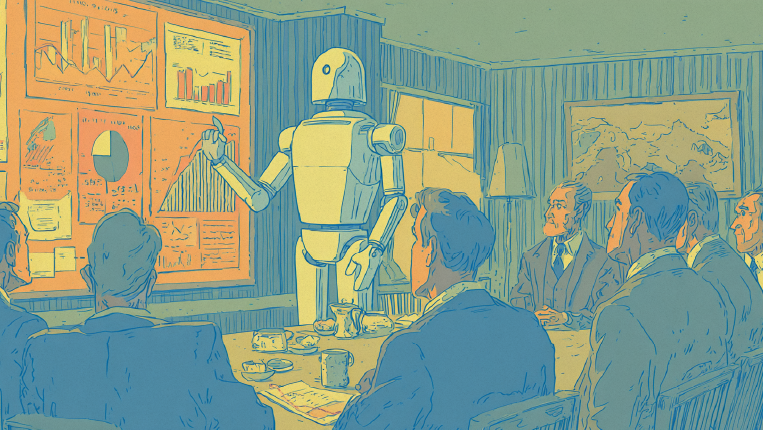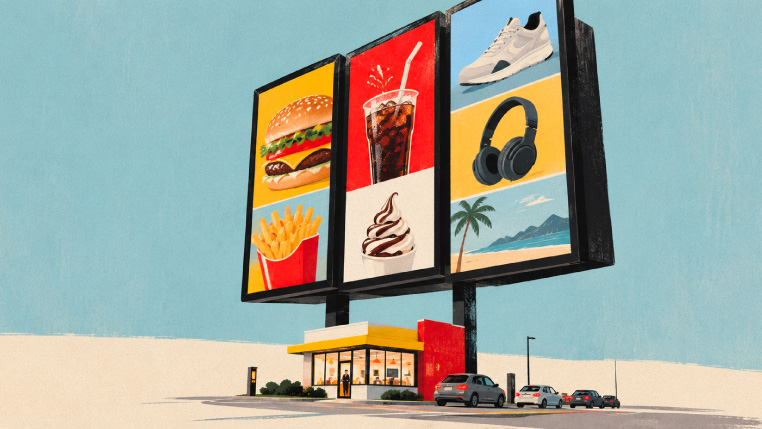
Why AI search skips content that says what everyone already says.
Published on 24 July, 2026 | Author: Agnes Marggs | 3 min read
Something quietly strange is happening in search. The page ranking first on Google may never appear in ChatGPT’s answer. Your carefully optimized guide, the one built around the right keywords, may simply not exist to the model your buyers now ask first.
None of this is a glitch. It is the design.
What happens when someone asks an AI a question.
Ask ChatGPT who wrote Crime and Punishment and it answers instantly. Ask it the current price of oil and it searches. The difference is a mechanism researchers call adaptive retrieval: the model answers from its own training knowledge by default and only reaches for the live web when its confidence in that stored knowledge drops below a threshold.
That threshold is the trapdoor most content falls through. Everything the model already knows well, the settled facts, the widely repeated best practices, never triggers a search at all. A page can be flawlessly written and beautifully ranked, and still never get read by the system deciding what a buyer sees. The pages that do get pulled in share one property: they contain information the model was not confident about, usually because it was not trained on it. Fresh data. Specific outcomes. Opinions the internet has not already flattened into consensus.
Why Google’s playbook does not transfer.
A large-scale academic study comparing Google Search, Google’s AI Overviews, and Gemini across an 11,500-query benchmark found the source lists returned by each system are strikingly dissimilar, averaging below 0.2 Jaccard similarity, with only about 18% of sources shared between AI Overviews and traditional results. Despite all three being built by the same company. The systems are pulling from different rooms.
The click-through economics compound the pain. Pew Research found that when an AI summary appears, users click a traditional search result in 8% of visits, versus 15% when no summary shows, across nearly 69,000 real Google searches. Ranking without being cited increasingly means ranking to an empty room, which is why “we have great SEO” is starting to describe a shrinking asset rather than a durable one.
What survives the trapdoor.
If commodity content is the failure mode, survivable content practically defines itself: pages that give the model something it does not already know. Original data your team collected. Specific outcomes with numbers attached. Named opinions from people willing to be quoted. First-hand accounts of how something actually worked, not the industry’s polished version.
This is the shift writers have sensed for two years and are now watching show up in the data. The AI answer needs a reason to reach past its own confidence, and only genuinely new information provides one.
Twenty years of SEO, in reverse.
Traditional SEO rewarded content that matched what everyone else already said, faster and better structured. The winning strategy, stated honestly, was to say the standard thing well.
AI search inverts nearly every one of those instincts. Position is irrelevant if a page never enters an answer. Backlinks matter less than being a source the model has not already absorbed. And saying the standard thing well is exactly the pattern adaptive retrieval is built to skip past.
The plainer version.
Write what the internet cannot already say. Publish the number your team measured. Quote the person whose opinion has not been reduced to a talking point yet.
The signals here have been mounting for a while. This month they got a mechanism to hang on.
Recommended Post