The Anti-AI Campaigns Have Arrived
Published on 22 October, 2026 | Author: Agnes Marggs | 4 min read
Picture a world the size of a dollhouse. Every set is physical. Every object is handmade. Hands enter the frame holding a smart ring, and those hands belong to a real person whose name goes into the credits. The ring is the only object in the film that was not made from plywood, paint and someone’s time. Not one pixel was generated.
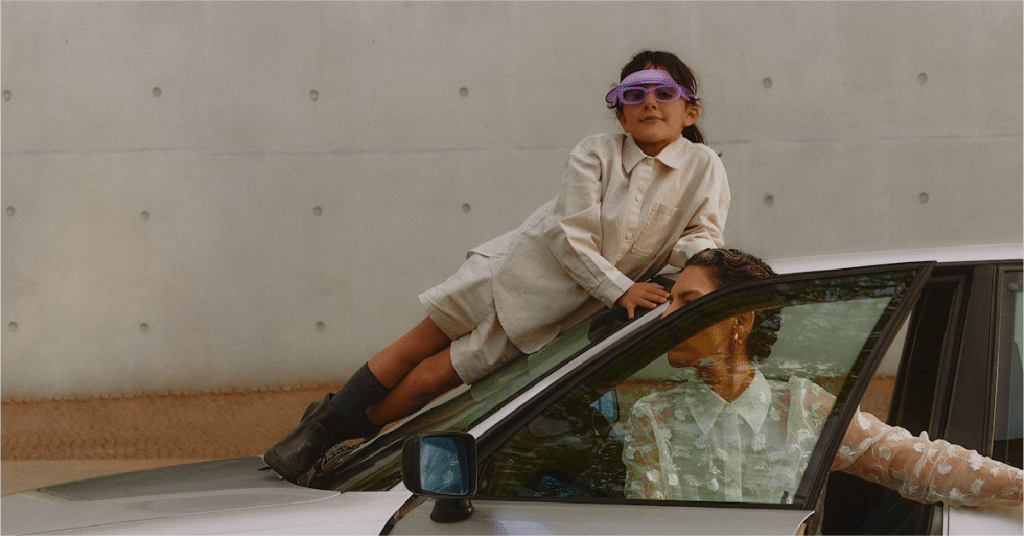
Oura launched “Wear Your Best Life” on October 8, a new global brand platform built around its newest smart ring and rolling out in phases across the U.S., U.K., Canada, Australia, Germany, the UAE and Finland. Oura’s own announcement states that the campaign is built entirely by hands, for hands, and avoids Generative Artificial Intelligence. Giselle Persak, who leads integrated marketing at Oura, said in the post, “We weren’t interested in making a standard product spot. We wanted to build an emotional world that viewers could step into.”
What actually happened is a brand marked its new creative platform with a deliberately traditional construction choice at a moment when most consumer campaigns are leaning towards computer generated imagery. Oura did not just skip generative tools. It put the fact that it skipped them into its announcement, which turns a production decision into a positioning one.
Oura is not alone in making that choice. Earlier this year, Blue Diamond launched an Almond Breeze campaign with the Jonas Brothers in which the group fields a series of absurd AI-generated pitch concepts before settling for a straight celebrity endorsement. The release’s own framing was that genuine celebrity endorsements and creative collaboration still reign supreme over AI-generated advertising. Two brands, two categories, same move. Both are naming the absence of AI as the substance of the campaign.
Name the mechanism directly. In a market where every category is cheaper to visualize than ever, visible human effort has become a signal buyers notice. A miniature set is more expensive than a prompt. A real set of brothers in a real room is more expensive than a generated one. The expense is the point. Audiences read effort as a proxy for caring about the product, and some brands are now spending to make that effort visible.
The mechanism alone does not explain why the wave is landing now. One year ago, almost no major consumer brand was publicly positioning against generative creative work. The shift traces to the output itself. AI-generated advertising has gotten cheap enough to flood feeds and recognizable enough to be rejected on sight. That recognition provides the impetus for brands to distinguish themselves; if AI content has an identifiable look, not using AI has an authentic one.
That is the part worth sitting with if your own brand has quietly started leaning on generative tools for sales decks, email imagery, website hero shots or thought leadership. The decision to use AI was almost certainly made for efficiency, and the output almost certainly works at a mechanical level. The question Oura’s campaign and Blue Diamond’s spot both pose is a longer-horizon one. If every B2B brand in your category produces serviceable AI output at scale, serviceable AI output is no longer a differentiator—it is the baseline.
What does distinctiveness look like in that environment, concretely? It is not reverting to a pre-AI toolchain for everything. It is choosing one place in the brand where human effort is both visible and attributable. For Oura, that place is the brand film. For a B2B company, the equivalent might be an original research study with data from your actual customers, a conference keynote the speaker clearly wrote, or client case studies that read like someone spoke to the client first.
Run the test on your own company. Look at the three pieces of content your team produced in the last month that you would most want a buyer to associate with your brand. For each one, ask whether a careful buyer would be able to tell a human made the specific choices behind it, or whether it would read as generic AI output. If the answer is unclear, the content is doing something, but it is not working as a signal of effort.
The miniature world is a real place, built by people whose names appear in the credits. In a year when most campaigns will not survive longer than their media buy, Oura decided to make the people a part of the message.