
You are not just a lead factory (so stop acting like one)
Published on 29 April, 2026 | Author: Digitalzone
There was a time when marketing felt a little magical. When brainstorming ideas, telling stories, and connecting with people were the heartbeat of every campaign. Today, that heartbeat feels a little fainter.
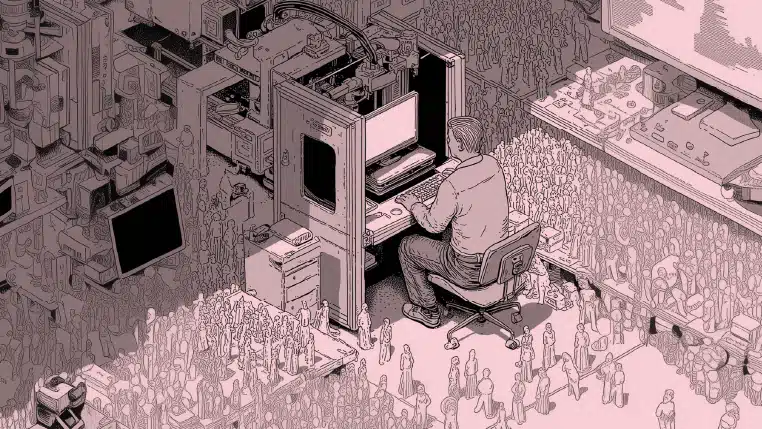
Between automation, the constant pressure for pipeline, and shrinking budgets, many marketers have started to feel less like creators and more like operators. The dashboards never stop flashing. The campaigns never stop running. The asks never stop coming.
But here’s the truth: you are not a lead factory. You are a strategist. A storyteller. A builder of relationships, ideas, and emotions. And it’s time to start acting like one again.
The myth of more: when efficiency replaces imagination.
Modern marketing has become obsessed with scale. We automate everything—from emails to nurturing flows, from social posts to reporting. We optimize, iterate, and analyze until there’s nothing left to tweak.
None of this is wrong. Efficiency matters. Automation matters. But the problem starts when efficiency becomes the goal instead of the means.
Somewhere between optimizing click rates and meeting MQL targets, we started treating humans like data points. We forgot that behind every form fill is a person with goals, pain points, and opinions. Marketing stopped being about connection—and became a production line.
The irony? The more automated and “optimized” things become, the less real the results often feel. Audiences tune out. Engagement drops. Creativity takes a backseat to compliance.
We built machines that can do marketing faster—but not necessarily better.
The human spark that AI can’t replicate.
Let’s get this straight: AI is not the enemy. It’s a tool—an incredible one. It can help us analyze patterns, write first drafts, and personalize at scale. But AI can’t do what only you can: feel.
It doesn’t know the joy of a campaign that truly resonates. It doesn’t understand the gut instinct that tells you when a headline will land. It doesn’t feel the rush of crafting a story that moves someone to action.
What AI does is give us time back—the time to do what marketing was always meant to be: creative, strategic, and deeply human.
So instead of letting AI define how we market, we should be using it to make space for what matters most: ideas that inspire.
From pipeline pressure to purpose.
Ask most B2B marketers what their biggest challenge is today, and they’ll say: pipeline. More leads. More opportunities. More revenue.
That pressure is real. But it’s also dangerous—because when pipeline becomes the only north star, creativity takes a nosedive.
Purpose-driven marketing doesn’t ignore revenue. It reframes it. Instead of asking, “How many leads can we get this quarter?” we start asking, “How can we make more people care about what we do?”
When people care, they engage. When they engage, they convert. Purpose drives performance—it’s just a longer game.
Brands that stand out today don’t win by shouting louder. They win by showing up with authenticity, empathy, and clarity. They tell stories that make people pause and think. They build trust before asking for attention.
That’s the kind of marketing that fills more than your pipeline. It fills your soul a little too.
Reconnecting with why you started.
If you’re feeling stuck in a cycle of dashboards, deadlines, and demand gen targets, it’s worth pausing to remember why you chose this field in the first place.
You didn’t become a marketer to chase numbers. You became one because you love ideas. Because you enjoy solving problems in creative ways. Because the thrill of seeing something you helped create out in the world never really gets old.
So how do you bring that spark back?
Here are a few ways:
- Start with empathy, not data.
Data helps you understand what people do. Empathy helps you understand why they do it. Before you segment an audience, imagine their day. What’s frustrating them? What’s exciting them? What do they actually want from you? - Focus on experiences, not just conversions.
A click is a moment. A great experience is a memory. Think beyond the CTA—how can you make every interaction feel valuable, personal, and human? - Celebrate creativity as much as efficiency.
Track ROI, sure. But also celebrate the campaign that took a bold risk, the headline that made someone smile, or the concept that sparked a new conversation. Those are just as important. - Use AI as your co-pilot, not your compass.
AI can help you get to good faster—but it can’t define what “good” means for your brand. Let it take care of the heavy lifting so you can focus on strategy, storytelling, and connection. - Remember that people > processes.
The most powerful campaigns often come from collaboration—when designers, strategists, writers, and salespeople all bring their perspectives to the table. Processes matter, but people make the magic happen.
The new marketer: creative, strategic, and human.
The role of marketing is evolving again. We’re entering an era where success depends not just on efficiency, but on emotional intelligence.
Today’s marketer needs to be part data scientist, part psychologist, and part artist. You have to understand numbers but also nuance. You have to use automation but also intuition. You have to speak to logic but sell with emotion.
That’s the balance modern marketing demands. And it’s what makes it exciting again.
Because while AI can help us move faster, only humans can make meaning.
The future belongs to marketers who feel.
We’re at a crossroads. We can keep running faster on the same hamster wheel—pushing out campaigns that look great on spreadsheets but feel hollow in reality.
Or we can slow down just enough to remember why we’re here.
To connect. To create. To make someone stop scrolling for a second and think, “That’s me.”
That’s the work that matters. That’s the work that lasts.
So the next time someone asks for “more leads,” remind them what marketing really is: not a factory, but a craft.
A craft built on curiosity, creativity, and the courage to care.
Don’t just generate demand. Inspire it.
Maybe this is the moment to demand better—not from your tools or your team, but from the way we define marketing itself.
It’s not about more leads, more automation, or more dashboards. It’s about more meaning.
Because at the end of the day, the brands that win aren’t the ones that generate the most data—they’re the ones that make people feel something.
And that starts with you.
You’re not a lead factory.
You’re a storyteller.
Start acting like one.