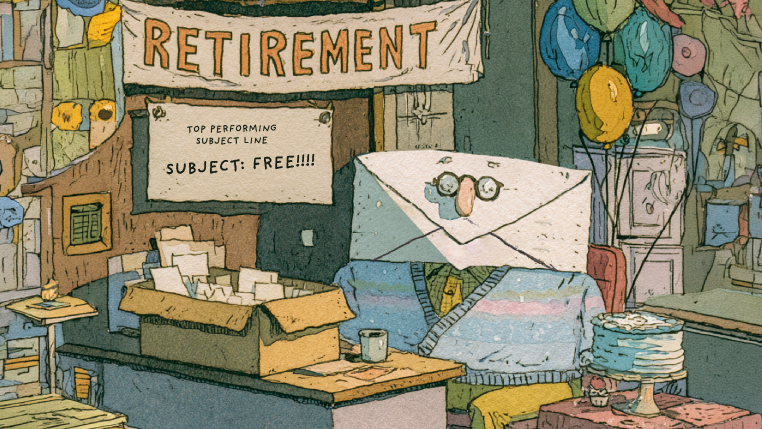
4.6 billion emails just retired your subject line rules.
Published on 16 July, 2026 | Author: Agnes Marggs | 4 min read
It is 11pm and a marketer is staring at a subject line. She deletes the word free. She does not know why, exactly. Somewhere years ago someone told her it trips spam filters, or looks cheap, or kills opens, and the advice fused into reflex. She adds the recipient’s first name instead. Checks the character count, twice.
None of this is strategy. It is ritual, the marketing equivalent of lucky socks, and every one of us performs some version of it before hitting send.
The rules behind the ritual came from somewhere (a conference talk in 2011, probably, or a blog post citing a blog post), but nobody checks the origins anymore. The rules are simply how emails get written. Keep it short. Personalize. Urgency sells.
Until someone finally checked.
The test the rules never had.
Researchers at the University of Helsinki analyzed 31,812 real marketing subject lines and studied how they performed across a combined 4.6 billion sends. Not a survey of what marketers believe works. Not a case study from one lucky brand. Actual subject lines, at a scale where ritual has nowhere to hide.
It is the stress test our inherited rules never got, and several of them did not survive it.
The rule that got caught costing you.
Start with the biggest casualty, because it is the advice you have read most often: power words. Free. Exclusive. Today. Flash. Save. Every guide of the past two decades promised these words move opens. In the study, subject lines containing them generated significantly lower open rates than lines without them. The most repeated tip in email marketing has not been coasting on reputation. It has been quietly charging you for the privilege.
Personalization did not exactly die, but it did get demoted. The tactic we have all treated as table stakes produced only a modest lift, and the researchers’ honest advice is the unglamorous kind: test it on your list before you trust it. Your audience may love seeing their name. They may also find it faintly creepy. The data cannot tell you which from here.
The one that survived.
Here is the fun part. A single exclamation point lifted opens by nearly 4%. One. (Not three. We see you, three.)
And the broader pattern behind that little survivor is the piece worth remembering: small, deliberate departures from convention outperformed careful compliance. Unexpected punctuation, unconventional formatting, the choices that make a subject line look slightly unlike the forty around it. The inbox does not reward obedience. It rewards the email that appears to have been written by an actual person having an actual thought.
Which, if you think about it, is what the rules were supposed to produce before they hardened into ritual.
The part where it gets awkward for the robots.
Now for the 2026 twist. Every AI writing tool that offers you a high-converting subject line learned that trick from somewhere, and the somewhere is two decades of the exact best practices this study just retired. Ask the machine for something that converts and it will hand you urgency words and manufactured exclusivity, served with complete confidence.
We trained the robots on the rules right before the rules failed. They now perform the ritual at scale, millions of times a day, faster than any of us ever could.
Test your own list.
There is an old story about a woman who cut the ends off every roast before it went in the pan, because her mother always had. Her mother had done it because her own pan was too small. The rule outlived the reason by two generations, and everyone kept cutting.
That is what a best practice is: a hypothesis with the expiration date rubbed off. The marketers who win the inbox this year will not be the ones with the best-rehearsed ritual. They will be the ones who tested their own list while everyone else, human and machine alike, kept trimming a perfectly good roast.
Your grandmother had a small pan. You do not. Cook accordingly.