The marketing philosophy behind McDonald’s new strategic plan has a B2B lesson inside it
Published on 12 June, 2026 | Author: Juliet Gallagher | 4 min read
McDonald’s just unveiled a new strategic plan called McDonald’s NEXT, built around four pillars: menu innovation, restaurant reimagination, hospitality, and marketing that makes customers feel part of the brand rather than just targeted by it.
While most of the plan covers operational fundamentals, the marketing philosophy behind it is worth pulling out separately because McDonald’s has quietly become one of the best examples of what it looks like when a brand treats culture as a strategy rather than a tactic.
The sneaker drop that proves the point.
Last month, McDonald’s partnered with Nike and NBA star Devin Booker on a limited-edition sneaker that referenced his time as a McDonald’s All American in high school and his connection to the chain’s Sedona, Arizona location. The collaboration wasn’t a standard celebrity endorsement. Booker reached out to McDonald’s because the connection was genuinely his.
What McDonald’s built around it is the more instructive part. The launch started with a mysterious found-footage video of a Ronald McDonald statue with turquoise shoes instead of red ones. There was no explanation for this video offered, just a visual that sneakerheads immediately started trying to decode. Clues rolled out across social content and a scavenger hunt followed. A pop-up at the Sedona McDonald’s had people camping overnight. The general release sold out in ten minutes, and McDonald’s is now waiting for the user-generated content to keep the story going as people receive their shoes.
The Backrooms video and the art of being proactive.
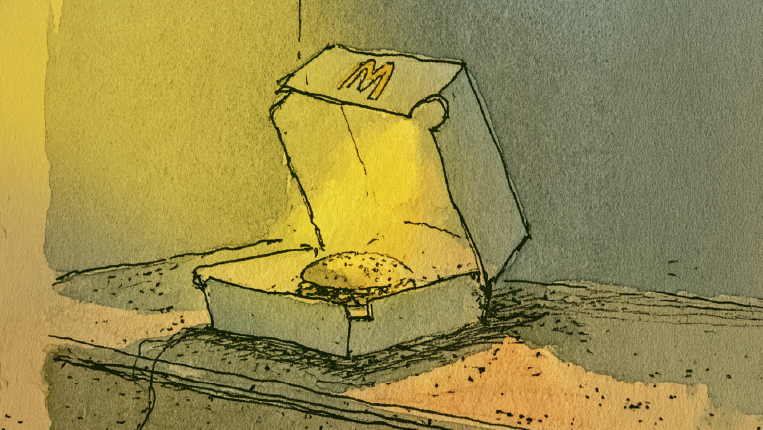
The same week the Booker teaser dropped, McDonald’s posted a two-minute video styled after Backrooms, the online horror phenomenon that just broke box office records. The connection wasn’t forced. McDonald’s already existed in Backrooms lore organically, which gave them the credibility to show up in that space without it feeling like a brand trying to be cool.
McDonald’s Director of Social Media and Creators Amanda Mulligan described the approach as proactive cultural listening, knowing what’s about to surface in culture, evaluating whether there’s an authentic conversation to join, and being ready to move when the moment is right. Not every trend is worth jumping into. But when the connection is real, moving fast is the advantage.
What B2B marketers can actually use from this.
B2B marketing doesn’t have sneaker drops or Backrooms lore. But it does have communities, subcultures, and shared experiences that buyers already care about. Most B2B brands are still inserting themselves into those spaces rather than building from inside them.
The McDonald’s playbook translates in a few specific ways. Starting with what your audience already cares about is more powerful than starting with what you want to say. Distribution built into the concept—content that gives people a reason to share before you ask them to—travels further than content that depends on paid reach. Participation beats passive consumption every time. The Booker scavenger hunt worked because it gave fans something to do, not just something to watch.
The other principle worth taking seriously is the proactive listening piece. Instead of simply reacting to cultural moments, McDonald’s monitors what’s building, evaluates whether there’s an authentic connection, and moves when the timing is right. For B2B marketers, that means staying close to the conversations your buyers are already having, for example, in communities, on LinkedIn, at events, and being ready to add to them rather than waiting for the marketing calendar to catch up.
The takeaway.
McDonald’s NEXT is a business strategy built on a marketing philosophy: culture isn’t a channel, it’s a commitment. The brands that show up authentically in the spaces their audiences already occupy and give those audiences something to participate in are the ones that generate stories rather than campaigns. That logic applies whether you’re selling fast food or B2B software. The question for every marketer is the same one McDonald’s keeps asking: what is the fan truth, and are we building from it?
Recommended Post