One Word, One Day, One Billboard Away
Published on 30 October, 2026 | Author: Agnes Marggs | 4 min read
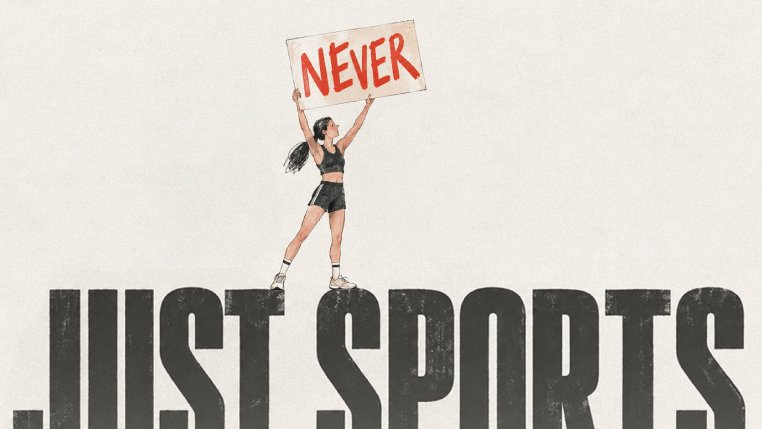
The only word Powerade added was “Never.” The rest of the line, “Just Sports,” belonged to Novig, which had been running it with Sydney Sweeney since September of 2026. Then, within roughly one day of each other, the two brands made their moves: Powerade’s reply appeared on Times Square screens, and Novig released a second Sweeney spot. Coverage disagrees on which came first, which says something about how tight the exchange was.
Novig launched “Just Sports” on September 9 as its first national brand campaign, with Sweeney joining the prediction market as a strategic partner and equity holder. In the ads she posed with sports equipment covering her body, and several professional women athletes publicly criticized the campaign for sexualizing women in sports.
Powerade’s answer was “Never Just Sports.” The brand posted clips of women swimming, sprinting, playing tennis, lifting and clearing a high jump bar, captioned “There is no just in sports.” The post carried the hashtag #PowerYourLegacy, a subtle pointer to the history the brand was building upon.
The staging is the move. Novig had planted its creative in one of the most expensive outdoor-media environments in the country, where it would be seen without context by commuters, tourists and office workers by the million. Powerade bought screens in the same place. Anyone looking up at the block could see a celebrity posing with sports equipment on one screen juxtaposed with athletic women competing in actual sports on another. Call it a battle of the billboards if you like, though Powerade never once said who it was fighting.
Comparative advertising campaigns that answer a rival in public are not new. They often take months of planning, legal review and an agency cycle long enough for the moment to pass. Powerade’s reply and Novig’s sequel ad landed inside of the same news cycle. Powerade’s creative response existed because the controversy did, and it is hard to imagine it being built any other way.
Name the mechanism directly. Changing one word in a competitor’s slogan is not a creative feat on its own. It is an acknowledgment that the competitor’s framing has already become the frame of the conversation, and that reframing from inside it is faster than inventing a new one. Powerade did not argue with “Just Sports.” It kept the phrase and let a single added word reverse its message.
The mechanism alone does not explain why Powerade could pull this off. In June 2024, Powerade named sprinter Sha’Carri Richardson and swimmer Katie Grimes as the faces of its “It Takes More” campaign for the Paris Olympics, which is to say the position was paid for long before anyone had heard of Novig. For most brands joining a cultural moment, the response is expensive because the stance has to be invented on the spot. Powerade’s was already on the books.
That is the part worth sitting with if your company has ever watched a moment in its category pass without responding because the brand had no defensible stake in it. The lag is rarely creative, it is strategic. A brand with a clear position can move in a day because the position has already been built. A brand without one must assemble it, test it, align stakeholders and produce the work while the moment cools, and by the time the response ships, the audience has moved on.
What distinctiveness looks like in a real-time response is not speed alone. It is proximity to the original. Powerade answered in the same medium, the same city and the same words, which meant the audience that saw Novig’s line also saw Powerade’s revision of it, often in the same glance.
Run this test on your own company. Pick the last culturally significant moment adjacent to your category that you let pass and ask what responding would have required. Not the creative, the position. If the honest answer is that the brand had no position ready to deploy, the gap worth closing is not your speed; it is your strategy.
Novig’s sequel suggests it has no plans to retreat from the line, and the billboard war may not be over. What is already settled is that Powerade’s one-word rebuttal yielded more than its media buy, because the real investment—a brand position built around athletes—was made long before the billboards went up.
Recommended Post