The rise of the “marketing engineer” and what it might be costing us
Published on 15 May, 2026 | Author: Juliet Gallagher | 6 min read
Marketing is getting more technical and not everyone is convinced that’s a good thing.
A recent Reddit post captured that tension perfectly. The author wasn’t rejecting systems, data, or automation. In fact, they were clear: systems are good. Process is good. Measurement is good.
But something about the direction marketing is heading isn’t sitting right.
“Marketing is slowly turning into engineering…and I’m not sure how I feel about it.”
The post struck a nerve. Dozens of marketers jumped in, not to argue, but to say some version of the same thing, which is that they’re feeling it too.
Underneath all the talk of AI, pipelines, attribution models, and “marketing engineers,” there’s a bigger question forming: At what point does marketing stop being marketing and become something else entirely?
The rise of the “marketing engineer”.
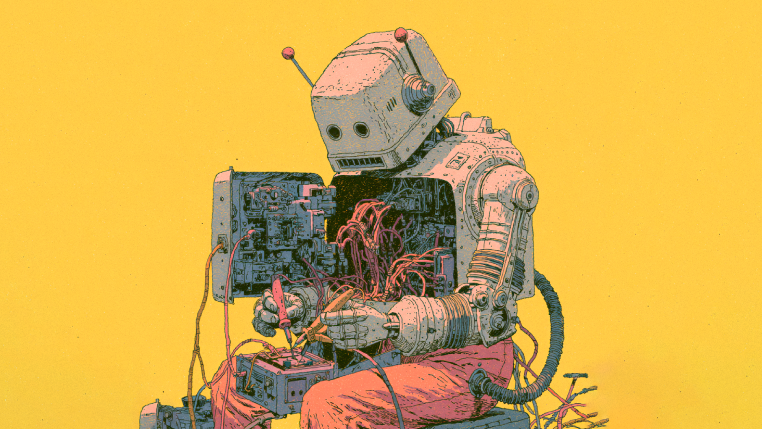
The post starts with a small but telling response to a new job title they had seen posted. The role was “marketing engineer” and on it’s own, it’s just a title, but when the poster zoomed out, they noticed that a pattern was emerging. Growth engineer, content engineer, GTM engineer, and now marketing engineers have all been roles popping up in the marketing sphere. Every function is slowly being reframed through an engineering lens.
The shift isn’t happening randomly. One commenter pointed out that these titles often follow a familiar playbook. Companies are designing a new role, attaching a new way of working to it, and building tools that support it. It’s not inherently wrong. But it does shape how marketers are thinking about their jobs.
Instead of asking:
- What does our customer need?
The question becomes:
- What system do we need to build?
When system becomes the strategy.
One of the most repeated ideas in the thread was simple, “The problem isn’t systems. The problem is when system becomes the strategy.”
Systems are supposed to scale what works, create efficiency, and free up time for thinking. But more and more, marketers are building systems before they’ve found something worth scaling.
That leads to:
- Complex tool stacks with no real signal
- Dashboards that look impressive but say very little
- Workflows that take more time to maintain than they save.
Or, as one commenter put it, “We didn’t make marketing smarter, we just made it easier to make spreadsheets about it.” The systems aren’t bad, but they’re starting to replace the thinking they were meant to support.
The quiet tradeoff: creativity vs. measurability.
The original post calls this out directly by saying, “When every idea has to fit into a pipeline, attribution model, or dashboard… the weird bold stuff dies in the planning phase.”
The things that make marketing work like strong points of view, unexpected ideas, and creative risks are also the hardest things to model and predict. So they get filtered out easily, not because they’re bad, but because they’re hard to measure.
At the same time, pressure for ROI has never been higher. Leadership wants clear attribution, finance wants predictable returns, and teams want defensible decisions, so marketing starts to optimize for what can be measured instead of what might actually work.
Are we solving for tools or for customers?
Another thread running through the discussion is how much of this shift is being driven externally not by customers, but by tools.
The original post pointed out that these new roles are getting created and require new tools which then reshape how marketing gets done. Over time, marketers can end up adapting to the tool stack rather than building around the customer.
That shows up in subtle ways:
- Building workflows because “everyone has one”
- Adopting systems before validating a message
- Spending more time managing pipelines than talking to buyers
The more time spent inside these systems, the less time spent understanding the people those systems are meant to reach.
What happens to the “human” side of marketing?
For a lot of marketers, this isn’t just a shift in tools—it’s a shift in identity.
People got into marketing because they were passionate about creativity and storytelling. But now, the job description is changing.
More roles are asking for technical fluency, system ownership, and data modeling. Less roles are focused on what made marketing so unique in the first place. So where does that leave the people who don’t want to be engineers?
Some commenters pushed back and argued that creative work isn’t going away, it’s actually becoming more valuable. Engineering is just operationalizing parts of the process. Other commenters weren’t so sure.
Even if creativity still matters, the environment around it is changing.
What B2B marketers should take from this.
This isn’t a “systems vs. creativity” debate. It’s a question of balance and what is getting prioritized. Most B2B teams are already feeling more pressure to prove ROI, more investment in tools and infrastructure, and more expectations to operate like a system. The key is to be intentional about how far you take those pressures and what you’re giving up along the way.
- Don’tbuild systems before you have something worth scaling.
It’s easy to overbuild early. But if you haven’t validated your message, your audience, and your channel, then the system isn’t helping, it’s just adding complexity.
- Becarefulwhat you optimize for.
What you measure becomes what you prioritize. If everything is optimized for attribution, short-term ROI, or dashboard performance, then creative risks disappear and long-term thinking shrinks. Not everything that works shows up immediately in a report.
- Use systems to support thinking instead of replacingit.
The best teams aren’t anti-systems. They just use them differently:
- Automate what’s repetitive
- Systemize what’s proven
- Protect time for actual thinking
The system should make marketing easier to do without defining what marketing is.
- Stay close to the customer even as things scale.
The more complex the stack becomes, the easier it is to drift away from real conversations, qualitative insight, and actual customer behavior. No system replaces that.
The bigger takeaway.
Marketing isn’t becoming engineering, but parts of it are becoming more operational, more measurable, and more system-driven. But strong marketers know that the core cannot change. You still have to understand people, have a point of view, and say something worth paying attention to.
The risk comes when systems start to define the work. When that happens, marketing doesn’t get more effective, it just gets more organized.
The marketers who stand out won’t be the ones with the most complex systems. They’ll be the ones who still know how to think.