
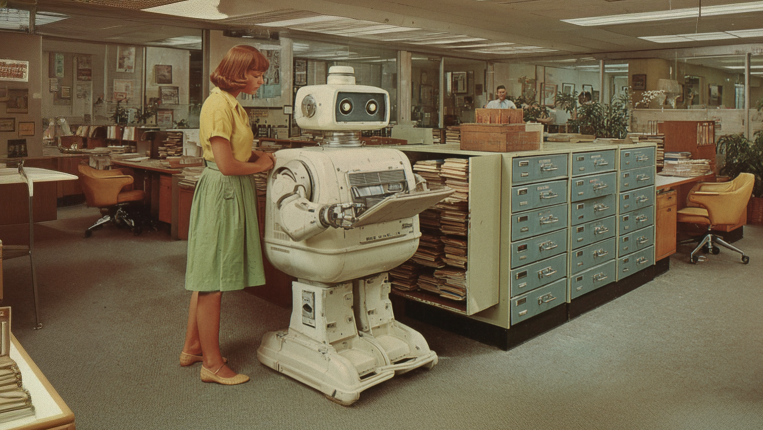
Is there an ideal AI-to-human ratio for content or are marketers debating the wrong variable entirely?
Published on 19 June, 2026 | Author: Juliet Gallagher
AI adoption among content marketers has grown from 65% to 95% in just two years, according to Orbit Media data, which means almost everyone is using AI in their content workflow now. The question the B2B marketing community is still working out is how much AI to use and what the right balance looks like in practice.
A recent Reddit thread posed the question directly: what’s your ideal AI-to-human ratio for creating high-performing content? The options ranged from mostly human to mostly AI, with a human-plus-AI partnership and an AI-first-human-review model in between. The conversation that emerged reframed the debate in a way that’s more useful than any percentage could be.
The community weighs in.
The most common answer across the thread was somewhere around 70% human, 30% AI, with humans handling research, original thinking, first drafts, and strategic direction, while AI handles outlines, cleanup, gap identification, and repurposing. That split came up repeatedly across different practitioners with different workflows and different content types.
But the more interesting responses pushed past the percentage framing entirely. Several commenters pointed out that the ratio question assumes the human’s job is to write (the input) when the actual job is to supply the thing AI structurally cannot: specific experience, original opinion, client context, and the story nobody else has.
“AI can write beautifully and say absolutely nothing,” one commenter wrote. “Measure by what in here is irreplaceable, not what percent did a person type.”
The video and audio exception.
One of the most practically useful observations in the thread came from a commenter who pointed out that the 70/30 split mostly applies to written content. They noted that the ratio looks completely different for anything that started as audio or video.
For spoken content, like webinars, recorded panels, talks, sales calls, AI is genuinely good at the mechanical half. It can transcribe an hour of material, identify the six moments that stand on their own, and draft a first cut. These are all tasks that marketers would prefer to avoid, and it’s reasonable to hand it over.
The part that has to stay human is context judgment. AI will pull a sentence that sounds great in isolation but means the opposite of what the speaker was arguing, because it can’t hear the room. It will also skip the throwaway line that turned out to be the real insight because it didn’t read as quotable. Someone who sat through the session catches both in about two minutes. For B2B teams repurposing event content, webinar recordings, or executive interviews, that distinction is worth building into your process.
Where teams go wrong.
A few failure modes came up consistently across the comments and are worth naming directly:
- Treating AI as a replacement for writers rather than a tool that eliminates repetitive work so writers can focus on strategy, expertise, and differentiation.
- Pushing toward 80 to 100% AI for volume. Output goes up, distinctiveness disappears. The content becomes harder to tell apart from everything else.
- Using AI to assemble content without supplying a genuinely original insight, data point, or take first. A perfectly structured piece with no real point of view is still noise.
- Losing the context judgment layer—especially on repurposed content—and publishing something that misrepresents what was actually said or meant.
The AI overviews of it all.
One comment in the thread pointed out that content now has to get cited by AI search engines, such as ChatGPT, Perplexity, and Google’s AI Overviews. Those systems reward original data, a clear point of view, and first-hand experience. They skip generic content because it’s identical to everything else AI has already produced.
The irreplaceable human input is what makes content worth reading, but it’s also what makes content findable in the tools people now buyers with. B2B content teams who’s goal is visibility and pipeline should note that generic AI content is invisible to AI.
What this means for B2B marketers.
- Stop optimizing for the ratio. The percentage of AI versus human input doesn’t predict performance. What predicts performance is how much of the content could have only come from you. What are your experiences? What does your data say? What are your opinions?
- Define who owns which job. Rather than debating percentages, map your workflow by job type. Maybe AI owns volume, first drafts, outlines, and mechanical repurposing. And then humans own strategy, original insight, context judgment, and anything else where being wrong is public or expensive.
- Make sure you have a built-in review layer for spoken content. If you’re repurposing webinars, event recordings, or executive interviews with AI, the human review step matters more than it does for written content. The failure mode is public and it has your name on it.
- Original input is now the biggest SEO strategy. AI search systems reward first-hand experience, original data, and clear points of view. Generic AI content is increasingly invisible on the tools your buyers are searching with. Your irreplaceable human input is what keeps you in the conversation.
The bigger takeaway.
The AI-to-human ratio debate is the wrong conversation. The right conversation is about what humans bring that AI structurally cannot. Marketers have specific experience, genuine opinion, and insight that only exists because someone was in the room. For buyers, that’s the input that makes content worth reading, worth citing, and worth finding. The teams that figure out how to use AI to scale the mechanical work while protecting the irreplaceable human layer are going to produce content that performs. The teams that use AI to replace thinking will produce a lot of content that nobody remembers.