Oppenheimer’s Camera Meets a Dry Cleaner
Published on 13 November, 2026 | Author: Agnes Marggs | 4 min read
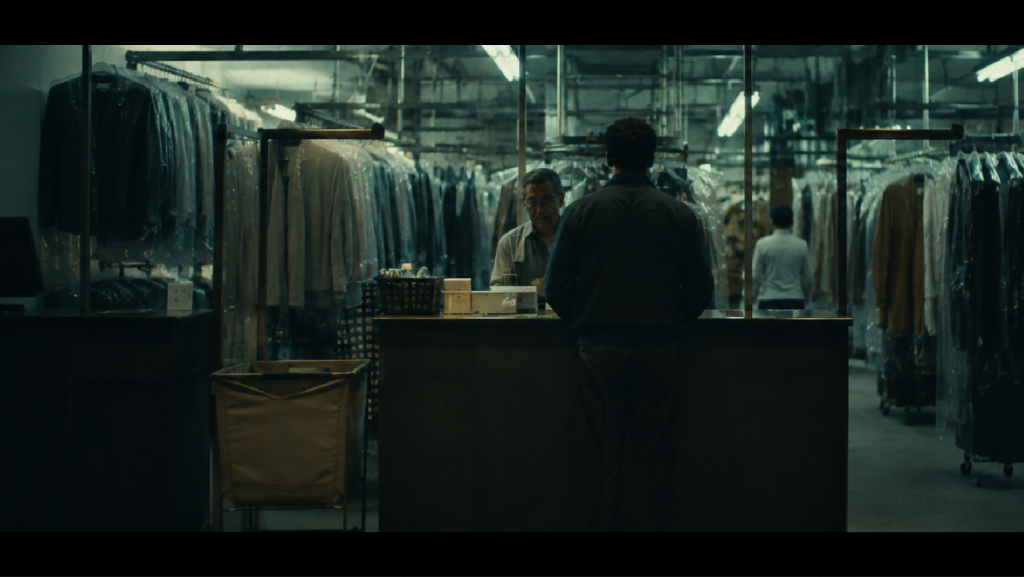
A man named Tony opens a dry-cleaning store. One store. It has been his dream since childhood, and his father, who wanted him on the corporate ladder, would like the record to show he disagreed. The man behind the camera is Hoyte van Hoytema, who previously shot Oppenheimer. Last time, the stakes were the end of the world. This time, they are a dry cleaner’s opening day, and the film treats them with roughly the same seriousness.
That is “The New Big Dream,” the hero film in Gusto’s new brand campaign, “Dream Small.” The payroll and HR platform announced the campaign on October 29 and calls it its biggest creative campaign to date. It was developed with Special US and directed by Nick Ball, and it runs across broadcast, streaming, social, audio, influencer and digital out-of-home, including live sports on CBS, FOX, The CW, Netflix and Prime Video through Thanksgiving week. Chief Creative Officer Ximena Keirouz described the target directly: the familiar version of American success, dream big, climb the ladder, build something massive. “The people we serve chose a different dream,” she said.
What actually happened is a B2B software company making a film about not scaling. The supporting spots go further into the unglamorous. A massage therapist never has to think about payday. A septic-service owner sets up health benefits mid-pump-out. An office manager sets up retirement plans while a coworker microwaves a burrito in its plastic wrapper. Anyone who has worked in an office has met that coworker. Few brand campaigns have had the nerve to cast him.
Gusto is not the first in its category to celebrate small business. Intuit QuickBooks unveiled its first-ever commercial for the Big Game in 2022, built around the entrepreneurial leap and the mix of emotions that comes with starting something. That is the category convention: small business as a beginning, the first chapter of something bigger. Gusto’s campaign quietly disagrees. In “Dream Small,” the one store is not chapter one. It is the whole book.
Name the mechanism plainly. Gusto positioned on its customer’s definition of success instead of the category’s. Most software sells ambition back to buyers in the vendor’s own vocabulary of growth, scale and acceleration. Gusto took the side of the argument with the larger constituency. The Small Business Administration reports that small businesses make up 99.9% of all US businesses. When the electorate is that lopsided, flattering the 99.9% is less a creative risk than a counting exercise.
The mechanism alone does not explain the timing. Gusto’s release points to record new small business applications this year and its own survey finding that 66% of millennials and Gen Z have seriously considered starting a business. There is also a commercial logic worth noticing. A payroll company that supports more than 500,000 small businesses earns its keep every time a new business opens, whatever size it stays. A campaign telling people their dry cleaner is enough is, conveniently, also a campaign telling them to open one.
That is the part worth sitting with if your B2B brand describes your customers’ goals in your own words. Read your homepage and count the appearances of “scale,” “grow” and “accelerate.” Then ask how many of your best customers would use those words to describe what they actually want. Some want the corner office. Plenty want Tuesday to go smoothly.
What does distinctiveness look like here, concretely? It is the specificity of the mundane. The category default is a dashboard, a smiling founder and a line graph pointing up and to the right. Gusto shows a septic truck. Specific, slightly absurd, unmistakably real moments are harder to copy than a feature list, and much easier to remember.
Run the test on your own company. Write down the single sentence your best customer would use to describe success, in their words, not yours. Then compare it to your tagline. If the two sound like they were written by different people, your brand is selling a dream your customer never ordered.
Tony’s store opens. The lighting is extraordinary. Nobody in the film explains why a dry cleaner deserves the man who shot Oppenheimer, and by the end, nobody needs to.
Recommended Post